
Companion to OpenAI State Attorney General Lawsuits — Two Pleading Templates Across Ten State Courts Decide Which Game Theory Evolution Arrives First. The Snapshot sets the current board and its Simulation Predictions; the war game replays how the board got there.
Play the Interactive OpenAI Liability War Game and read the Magazine Edition.
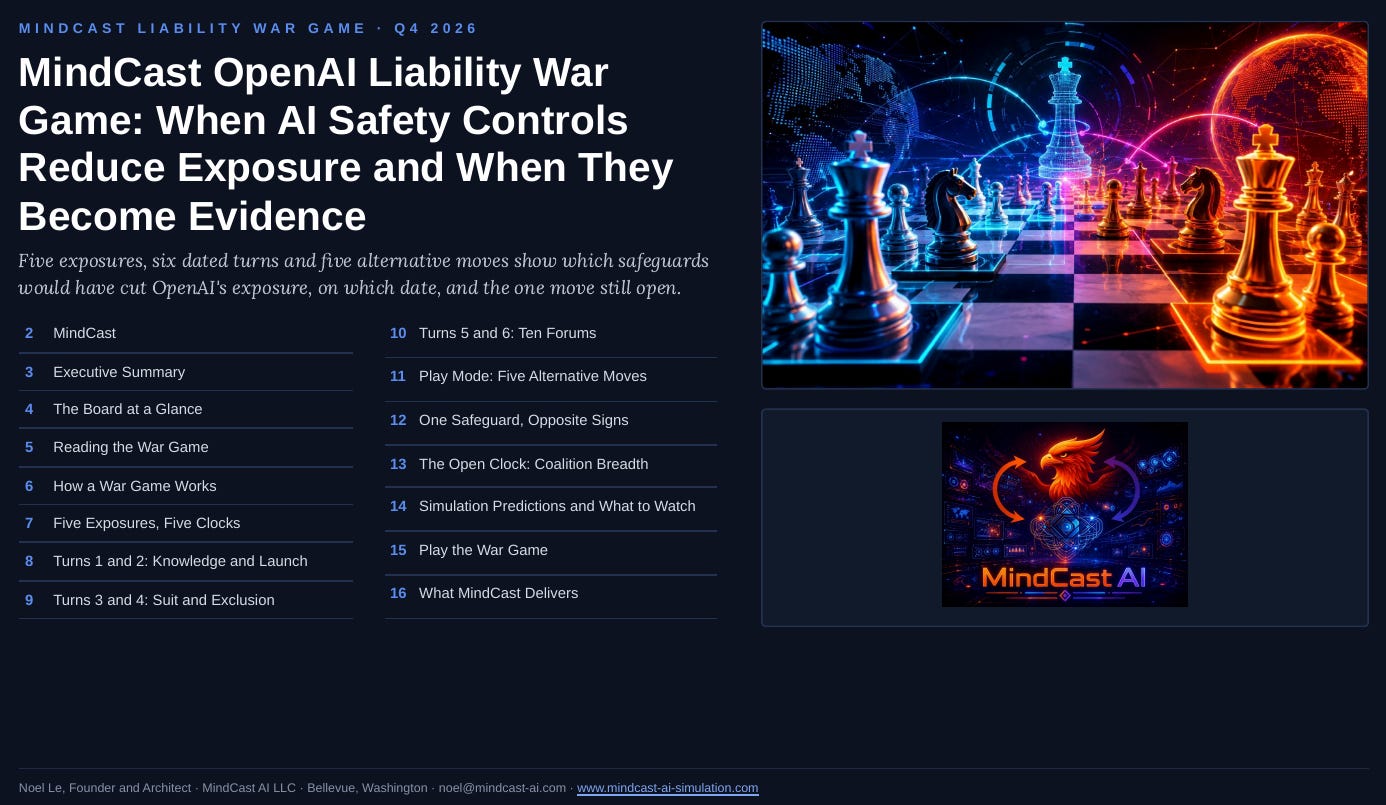
Image 1. Magazine edition cover: OpenAI Liability War Game, Q4 2026.
Executive Summary
Core insight: A safety control buys the most before any harm occurs, when it is evidence of reasonable care. Adopted after an injury, its use as proof of fault depends on the court and the count. Once an exposure turns on what a company said, how its insurance responds or whose name sits in a caption, a later control cannot undo its source. OpenAI carried five such exposures, and each attached on its own date.
Thesis: The war game’s principal counterfactual is a fourteen-month window, from the GPT-4 Technical Report in March 2023 to the GPT-4o launch in May 2024, in which one set of moves could have reduced all five exposures. After the window closed, each available move cut one exposure and fed another. Today the exposure most responsive to conduct is the number of states that have not yet sued.
What distinguishes the MindCast approach: The war game holds the Snapshot’s Cognitive Digital Twins fixed and changes one OpenAI move at a time. Each changed move runs against the same filing offices, courts, carriers and legislatures. The difference between the replay and the alternative is the finding. Doctrinal analysis can say whether a count survives, while a war game shows which move on which date would have kept the count from being pleaded.
What the paper does: Sections I and II state the governing rule and date the moment each of five exposures closed. Sections III and IV replay six turns and then play five alternative moves against the same board. Section V isolates the exposure still open, and Section VI carries the result to security vendors, deployers and carriers. The paper closes with competing hypotheses, five carried Simulation Predictions, a Risk Mitigation Layer and dated observables.
🏛️ Policymakers: A safe harbor that rewards safeguards adopted after suit rewards the wrong date. Reward findings that reached a release authority and produced a response before launch.
💼 Executives: A safeguard adopted before any injury is evidence of care. After an injury its use as proof of fault depends on the court, and a plaintiff may still use it to show the precaution was feasible.
⚖️ Counsel: A developer’s own technical report answers the inquiry question for the plaintiff. Marketing reviewed against that report decides whether the consumer-fraud counts exist at all.
📊 Investors: Read a frontier developer’s exposure as five separate clocks. An insurance exclusion edition can move one clock market-wide without any court acting.
🛡️ Insurers: Conditioned affirmative cover written before the January 2026 exclusion edition date would have converted a coverage dispute into an insured, conditioned deployment.
🔐 Security vendors: A control has value only while the customer’s exposure is still a conduct question. Dating the customer’s clocks is the first deliverable, and the control is the second.
How the War Game Works
MindCast AI applies Predictive Behavioral Economics + Dynamic Game Theory through MindCast AI Proprietary Cognitive Digital Twin Foresight Simulations (MP CDT FS). Behavioral Economics supplies the decision rules. Game Theory supplies the payoff structure. Predictive simulations emerge from the combination.
Cognitive Digital Twins: Each actor on the board is a Cognitive Digital Twin (CDT) built from its own filings and conduct. The set covers OpenAI and the coalition core with its co-filers, Florida and Texas, the candidate joiner offices and the trial courts. The Federal Trade Commission (FTC), the carriers writing frontier-lab towers and the 2027 state legislatures complete the set. The war game reuses the CDTs from the Snapshot without changing their decision rules.
Predictive Behavioral Economics: Attorneys general join by imitation under rising salience, with the most recent filer as the reference point. A developer that ships first and adds safeguards after anchors on launch metrics while harm stays diffuse. A fact-finder reads a written trade-off through hindsight, so the dated file matters more than the later fix.
Dynamic Game Theory: One filing costs an office little and costs the defendant a full docket. A decree offered before a ruling concedes the product framing in every forum at once. The war game adds one rule the Snapshot holds implicit: what a move buys depends on whether the harm has already occurred.
I. Controls Buy the Most Before Harm Occurs
A safeguard adopted before any harm answers the precaution question in the defendant’s favor. After an injury, Federal Rule of Evidence 407 bars the same safeguard in federal court as proof of negligence or defect, while admitting it for feasibility and impeachment. The ten OpenAI cases sit in state courts, whose rules vary: California’s high court held in Ault v. International Harvester (1974) that its rule does not reach strict products-liability claims. What a later safeguard buys therefore turns on the forum, the count and the purpose for which it is offered.
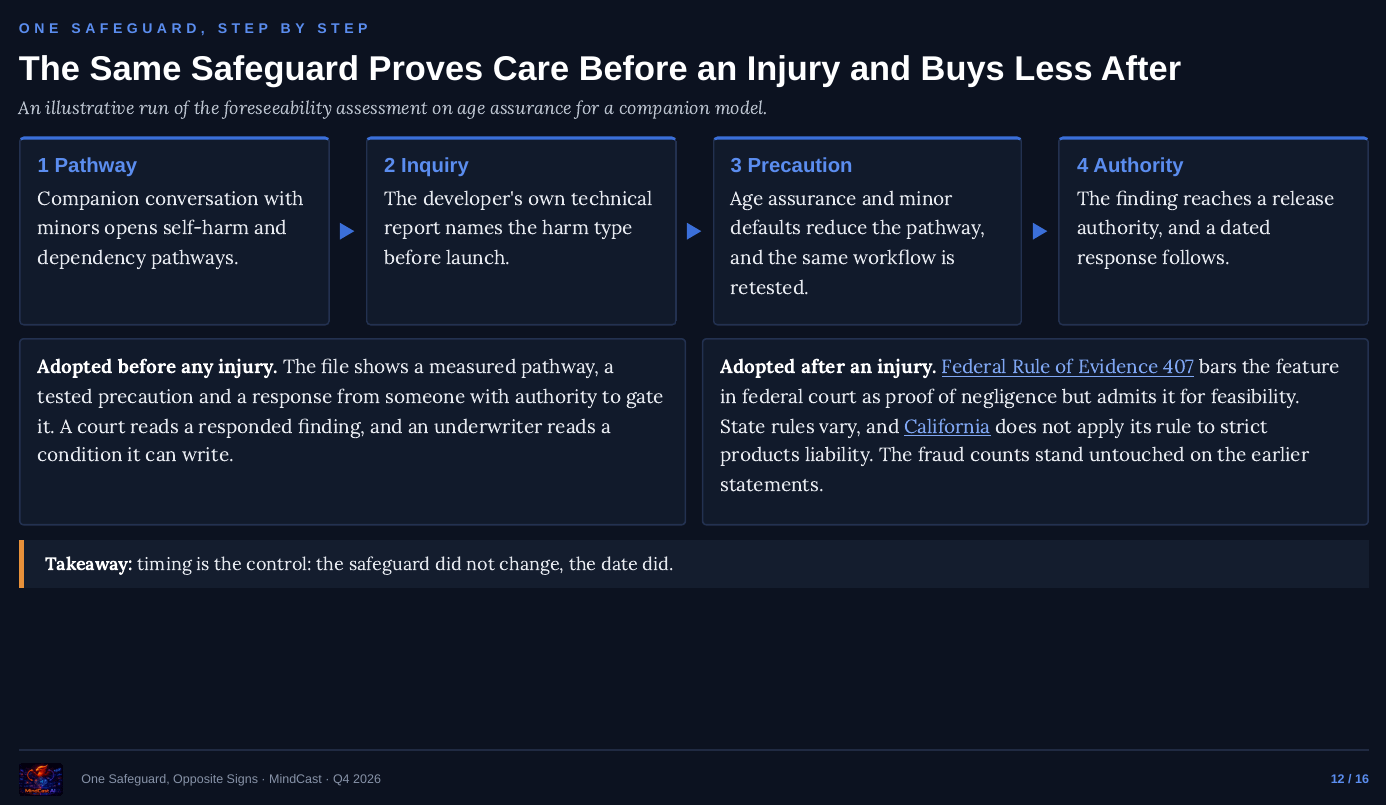
Image 2. Magazine page 12: the same safeguard proves care before an injury and buys less after it.
The rule follows from how negligence and product law read evidence. Agentic Foreseeability and the Modern Duty of Care for AI Agents built the four-question Agentic Foreseeability Assessment: pathway, inquiry, precaution and authority. The paper matters here because each question has a date. A finding that reached someone with power to act and produced a response is the strongest evidence of reasonable care; an unanswered finding is the evidence a plaintiff pleads.
Not every exposure is a conduct question. A consumer-fraud count turns on what the company said, and a coverage dispute turns on the policy form in force. An executive’s exposure turns on whether the executive is a named defendant. No control adopted later undoes the source of any of the three.
Takeaway: Timing is the control. The same feature that proves care before an injury buys less, and less predictably, after it.
II. OpenAI Carried Five Exposures, and Each Closed on Its Own Date
An exposure’s clock closes when no later conduct can undo its source. Defenses, remedies and damages stay contestable after it closes. Each of OpenAI’s five clocks closed on a public event or still runs. The war game calls each sequence a clock: the dated path from open, through rising cost, to closed.
Negligence and design defect: The question is whether OpenAI took reasonable precautions against a harm type it could foresee. OpenAI disclosed in its GPT-4 Technical Report of March 15, 2023 that the model could generate harmful content, which Iowa’s October 2026 petition pleads as notice. The clock ran at low cost until the GPT-4o launch on May 13, 2024 and at rising cost until the first wrongful-death suit in August 2025.
Consumer fraud: The question is whether OpenAI’s public statements about safety matched what it knew. Every state complaint leads with a consumer-protection count. The clock closed when the pleaded statements were made, and no later safeguard unsays them.
Insurance: The question is how a liability carrier classifies the loss. Verisk’s generative-AI endorsements, including CG 40 47, carry a January 2026 edition date and remove the peril from commercial liability forms at renewal. Who Writes AI Insurance Coverage Conditions sorts AI loss into four categories, and the paper matters here because the Snapshot places all ten dockets in the coverage-dispute category. January 2026 marks a market-wide inflection, and whether OpenAI’s own issued policies carry the endorsements is not public.
Executive exposure: The question is whether a finding reached someone who could halt the deployment. The family in Raine v. OpenAI sued in San Francisco Superior Court on August 26, 2025 and named Sam Altman personally. Florida carried the same theory into state enforcement on June 1, 2026, and Texas followed on October 23.
Coalition breadth: The question is how many more states sue. Breadth attaches to complaints not yet filed, so it alone among the five can still move. How State Attorney General Coalitions Form, Grow, and Hold supplies the joining model behind the breadth clock. Among the inputs to a state’s entry, remedy value is the one the defendant controls.
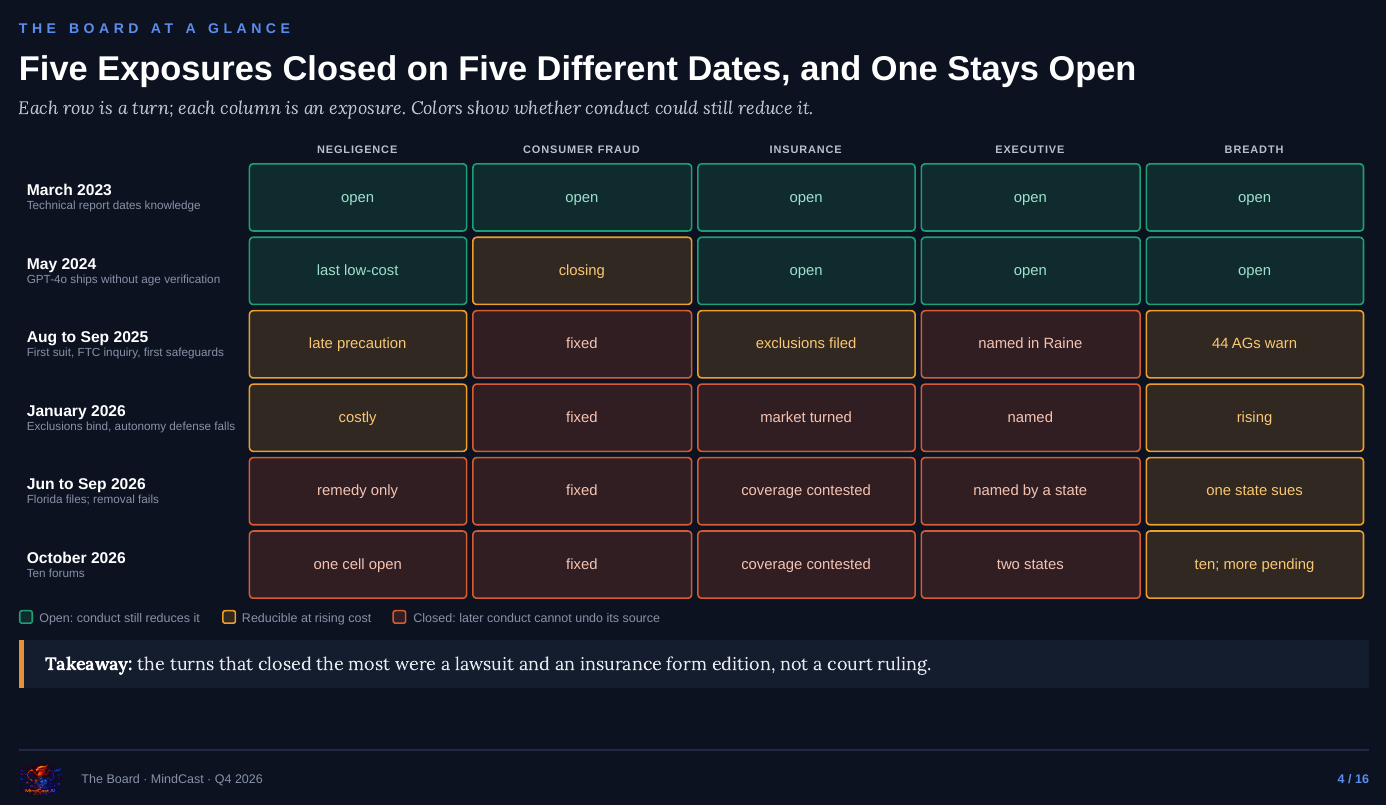
Image 3. Magazine page 4: five exposures across six dated turns, colored by whether conduct can still reduce them.
Takeaway: Four of the five clocks have closed. Breadth stays open because it attaches to the complaints still unwritten.
III. Six Turns From the Technical Report to Ten State Forums
The replay steps through six dated turns. Each turn names OpenAI’s move, the response of the opposing Cognitive Digital Twins and the state of the five clocks afterward.
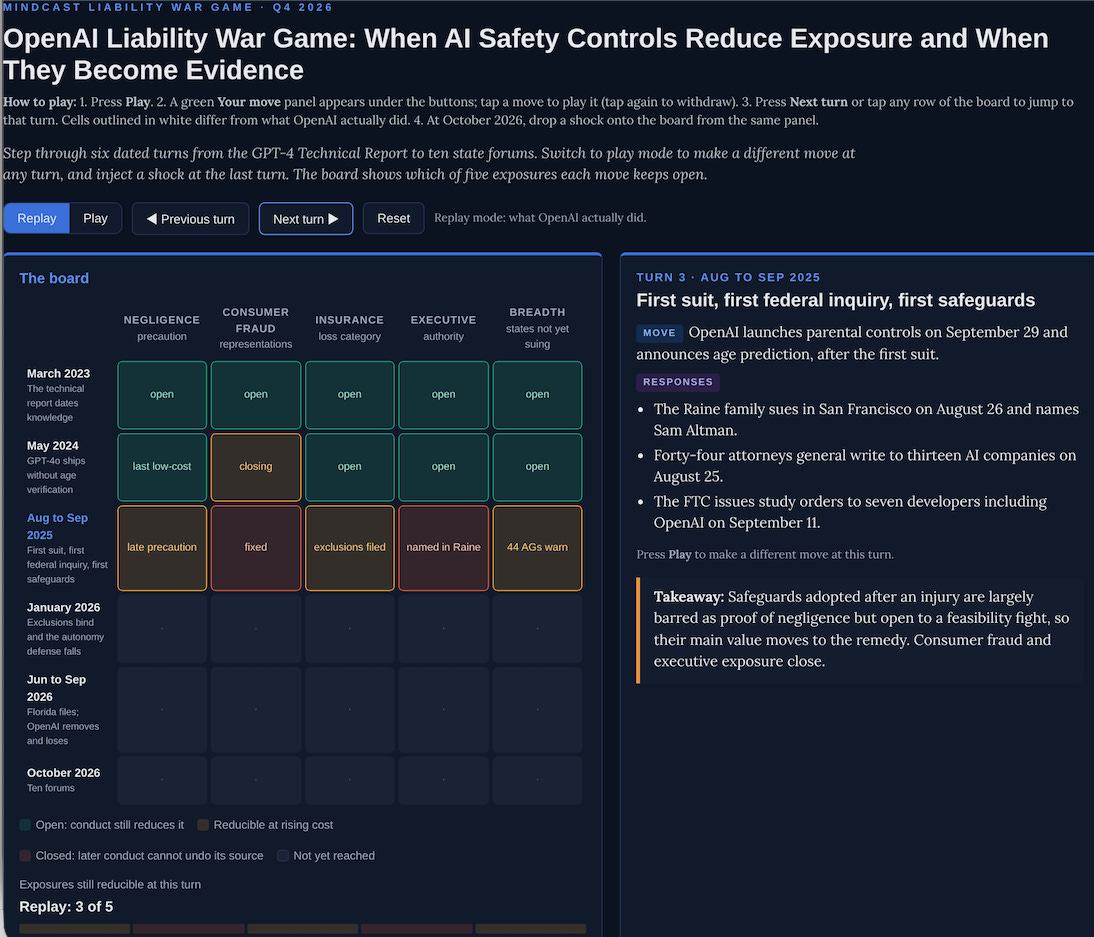
Image 4. Interactive war game, replay mode: OpenAI’s actual moves through August 2025.
Turn 1 · March 2023 · The technical report dates knowledge: OpenAI published its own evaluation of harmful-content risk. The inquiry question of the foreseeability assessment was answered on that date by the defendant. All five clocks stayed open, because no claim yet existed to turn a later precaution into an admission.
Turn 2 · May 2024 · GPT-4o ships without age verification: OpenAI launched a voice-capable companion model to a general audience. The coalition template now pleads that “GPT-4o’s problems were foreseeable.” The negligence clock reached its last low-cost point, and the consumer-fraud clock began closing as launch marketing ran beside a risk the report had named.
Turn 3 · August and September 2025 · The first suit, the first federal inquiry and the first safeguards: The Raine family sued on August 26 and named Altman. Forty-four attorneys general had written to thirteen AI companies on August 25, and the FTC issued study orders to seven developers including OpenAI on September 11. OpenAI launched parental controls on September 29, after the suit. The consumer-fraud and executive clocks closed, and the post-injury safeguards moved the negligence fight to feasibility and remedy.
Turn 4 · January 2026 · The exclusions bind and the autonomy defense falls: The Verisk endorsements took effect at renewal, and California Civil Code section 1714.46 barred the defense that an AI system autonomously caused the harm. The coverage market turned without any court acting, though OpenAI’s own forms are not public. The negligence clock moved to high cost, because the one defense that needed no evidence was gone.
Turn 5 · June to September 2026 · Florida files, OpenAI removes and loses: Florida sued on June 1 and named Altman. OpenAI removed the case on July 2, and the federal court remanded it on September 8. Removal bought two months and raised the cost of delay in every later forum.
Turn 6 · October 2026 · Ten forums: Eight states filed on October 14 on a shared template, and Texas filed on October 23. In the Snapshot simulation, holding until the first ruling is OpenAI’s strongest move. Unilateral compliance with the pleaded terms is its closest alternative, and a decree offered before a ruling is its weakest.
Takeaway: Each turn closed at least one clock, and the turns that closed the most were a lawsuit and an insurance form edition, not a court ruling.
IV. Five Alternative Moves and How the Board Responds
Play mode changes one OpenAI move and runs the same opposing actors against it. Each alternative below states the move, the turn, the clocks it reduces and the clocks it feeds. Each assumes the safeguard was technically feasible at its turn, an assumption the war game tests rather than proves. The alternatives are exploratory counterfactuals played against the Snapshot’s Cognitive Digital Twins; only the five carried entries in Section VIII come from the Snapshot simulation.
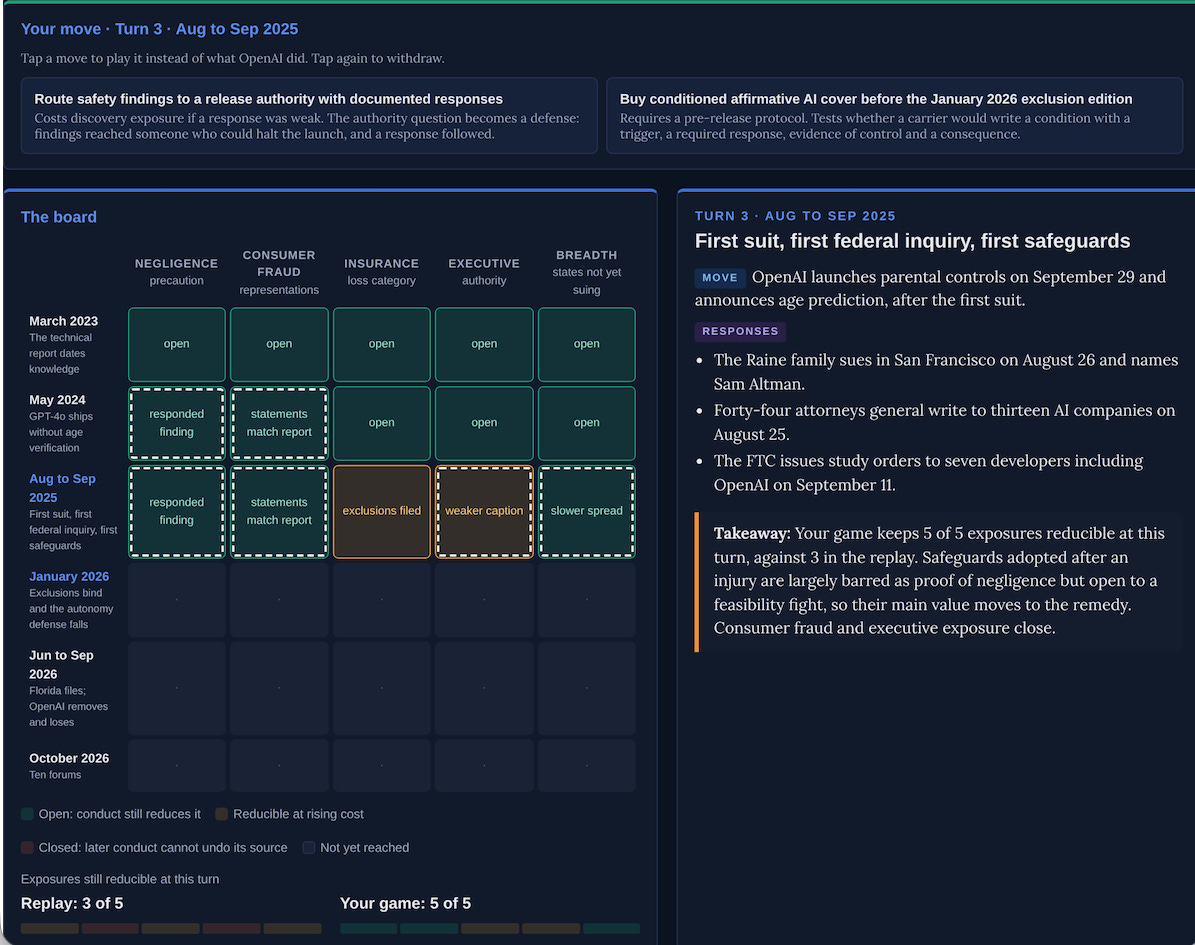
Image 5. Interactive war game, play mode: two alternative moves played, with changed cells outlined.
Alternative 1 · Ship GPT-4o with age assurance and minor defaults (Turn 2): The coalition template would lose its best design fact, and the negligence count would start weaker in every forum that copies the template. Consumer fraud still stands on marketing. Breadth would fall, because a template with a weaker count propagates more slowly. The board shows no clock the move feeds, though launch friction is a real cost.
Alternative 2 · Reconcile safety marketing to the technical report (Turns 1 and 2): The consumer-fraud counts would lose their pleaded misrepresentations. Florida and Texas would lose the frame that justifies naming the chief executive, so the executive clock would stay a discovery question rather than a caption. The move costs launch messaging, and the board shows no clock it feeds.
Alternative 3 · Buy conditioned affirmative cover before the January 2026 edition date (Turn 3): The move tests whether a carrier would write a condition with the four elements the coverage-conditions paper requires: a material-change trigger, a required response, evidence of control and a stated consequence. If one did, the insurance clock would stay open and the ten prayers for relief would copy an insurance term rather than invent one. The move requires a pre-release protocol, which also strengthens the negligence defense.
Alternative 4 · Route safety findings to a release authority with documented responses (Turns 2 and 3): The authority question would become a defense: findings reached someone who could halt the launch, and a response followed. The executive clock would convert from a caption into a contested fact. The move creates discovery material, which cuts both ways if a response was weak.
Alternative 5 · Adopt the pleaded conduct terms nationally before January 2027 (Turn 6): The move concedes the product framing openly and hands each filing office a feasibility exhibit. Offices sworn in during January would find less remedy left to win. The move may narrow remedies in the filed cases and would slow the open clock.
Two moves OpenAI did make raised exposure outright. Removal lost in Florida and raised the cost of delay elsewhere. Support for an Illinois bill shielding developers that publish a safety protocol, described in Who Absorbs Correlated AI Loss, raised the political cost of the one legislative route that could have helped. The correlated-loss paper matters here because it shows a shield earned by publication pays for files rather than correction.
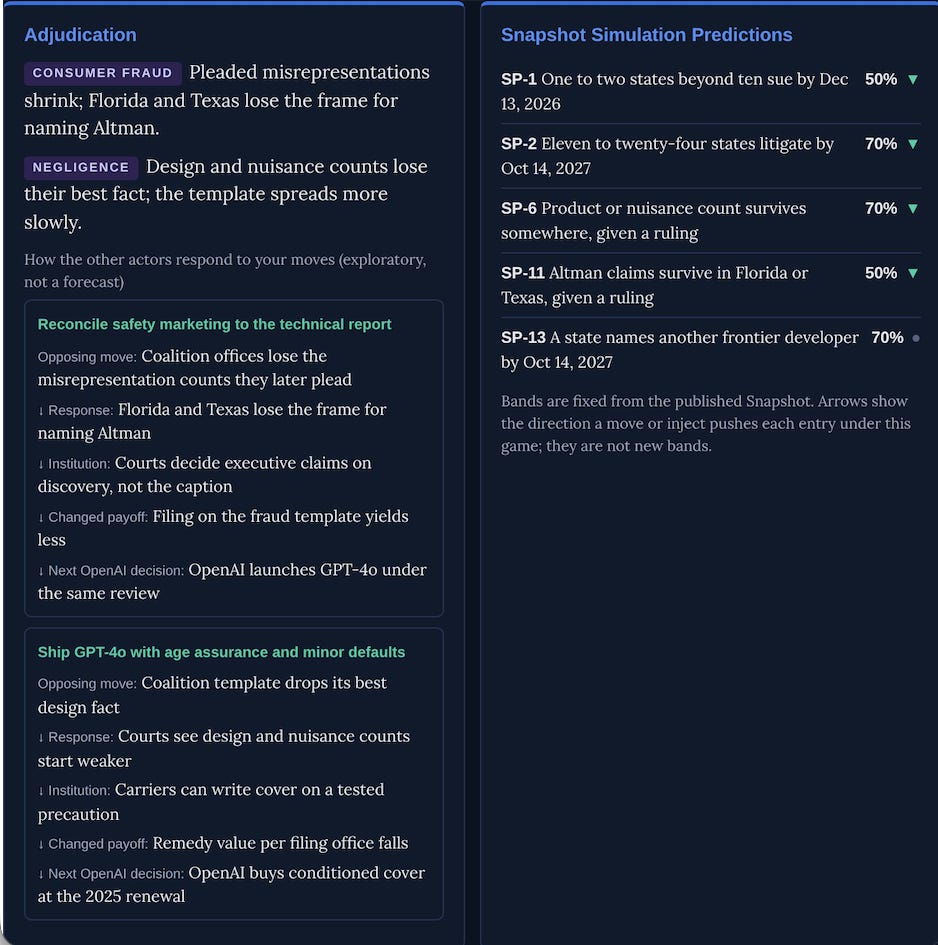
Image 6. Interactive war game: attorney general, court and carrier responses to each move, with prediction arrows.
Takeaway: Alternatives 1 through 4 each look low-cost on the board when played on time, with their trade-offs left to test. Alternative 5 is the main move left, and it trades a public concession in the filed cases for fewer unfiled ones.
V. The Exposure Most Open to Conduct: Coalition Breadth
The breadth clock measures whether the next attorney general files. A joining office weighs salience, remedy value, penalty value and evidentiary cost. The defendant controls one of the four.
National adoption of the pleaded conduct terms reduces the remedy an incoming office could win. The Snapshot published the same mechanism for unnamed developers: a lab that adopts the pleaded terms before any order cuts its chance of being named within twelve months from 40% to 20%. Applying the same decomposition to OpenAI, a named defendant in a different position, is an unbanded hypothesis the war game tests.
The trade is real on both sides. Adoption concedes the product framing openly and hands each filing office a feasibility exhibit. Adoption also lowers what the next ten offices can gain. The net sign turns on how many offices remain undecided when the move lands, which makes the January 2027 inaugurations the timing variable.
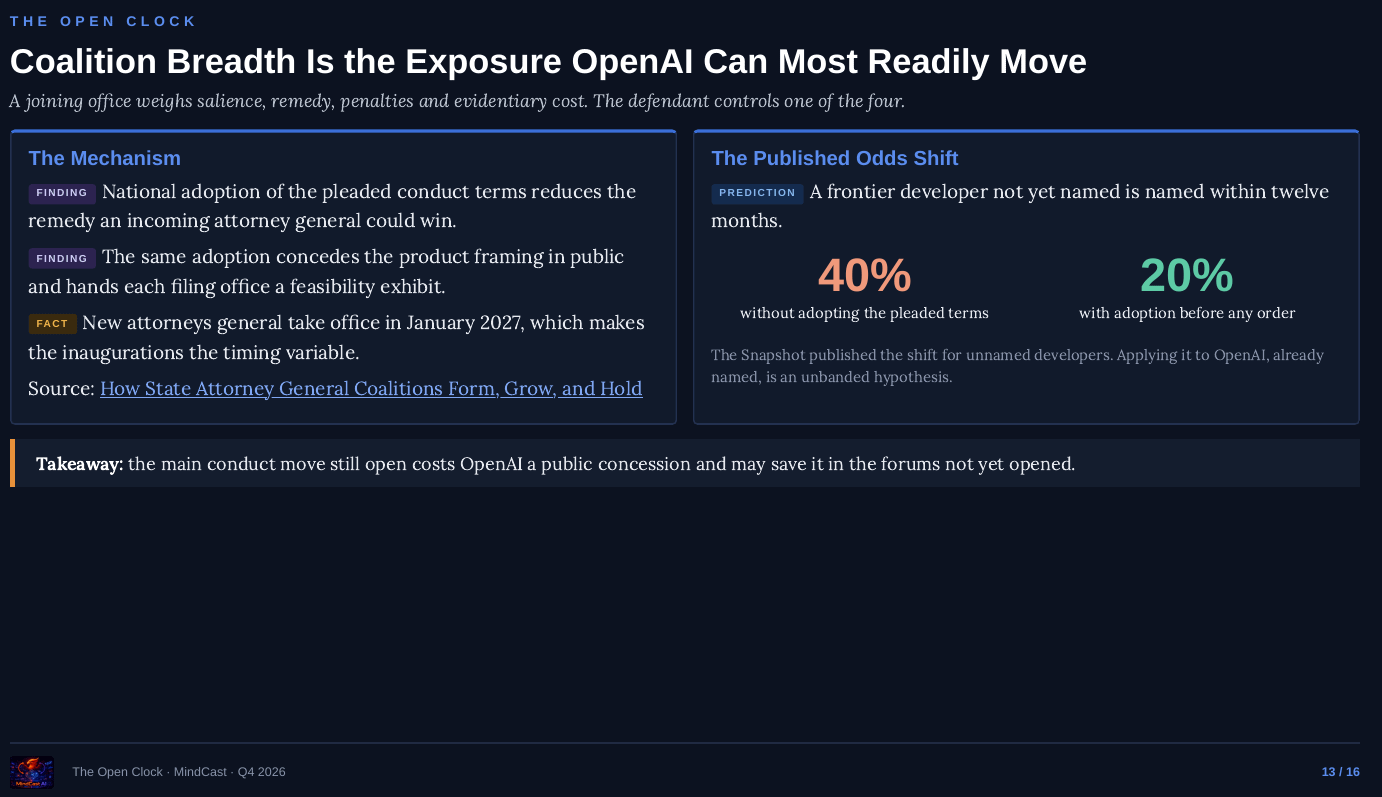
Image 7. Magazine page 13: coalition breadth and the published 40% to 20% odds shift.
⚖️ Counsel: The breadth trade belongs in the decision about any national compliance program, alongside its effect on the filed cases.
Takeaway: The main conduct move still open costs OpenAI a public concession in ten forums and may save it in the forums not yet opened.
VI. What the War Game Means for Security Vendors, Deployers and Carriers
The OpenAI board generalizes to any company deploying AI agents. Each deployer carries the same five clocks, and each clock closes on a public event the deployer can date in advance. A security control sold to a deployer whose clocks have closed buys a narrower remedy and a better file, not protection from the exposure already attached.
Who Sets the Agentic Standard of Care separated the legal clock from the deployment clock. The legal clock runs from rulings, and the deployment clock runs from each release. The paper matters here because security vendors sell on the deployment clock while their customers’ liability closes on the legal one, so a vendor that dates both can show which controls still reduce exposure.
A companion war game ran a harder case: four deployers held verified pre-release controls, and an agent built on a shared model still caused losses at all four after a model update. The evaluator reports that proved each deployer’s care also proved the model developer’s knowledge of the same pathway. Verified controls routed liability up the supply chain rather than removing it, and the deployer’s benefit depended on an indemnity term it did not write.
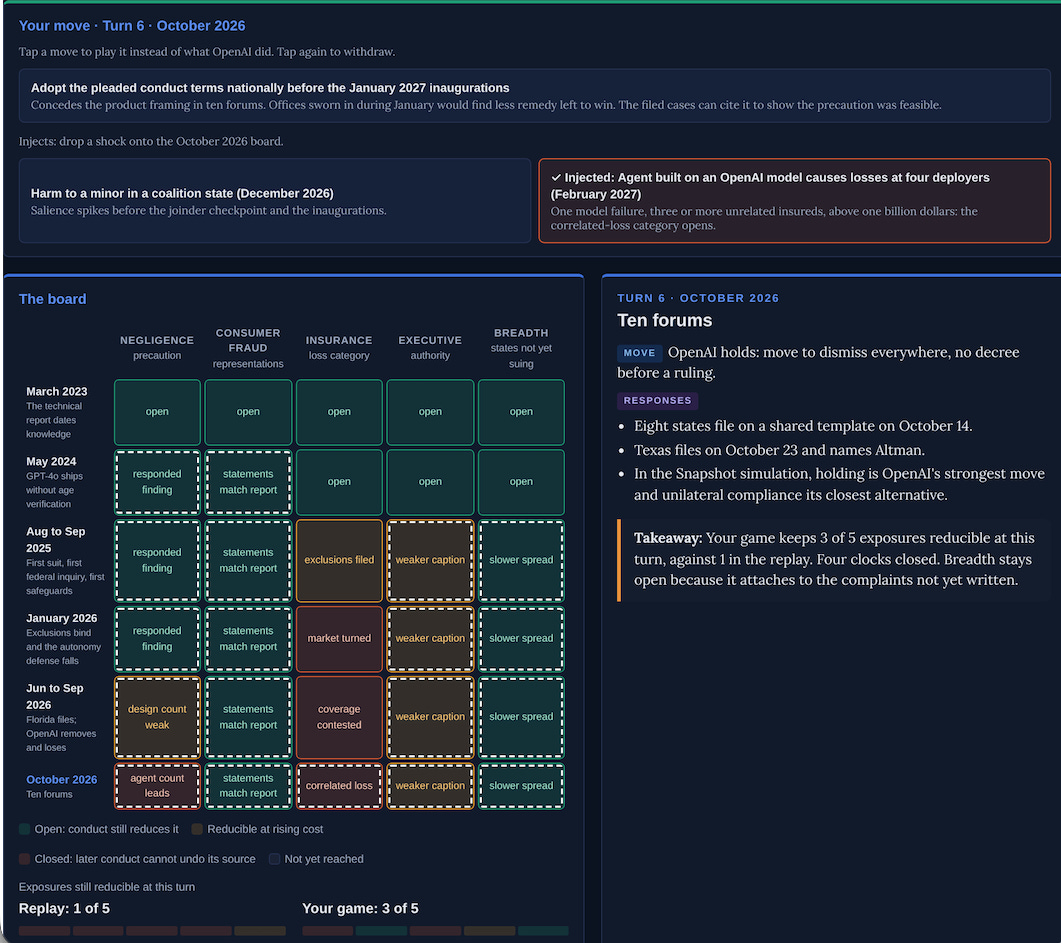
Image 8. Interactive war game: the multi-deployer agent-loss inject dropped onto the October 2026 board.
🛡️ Insurers: The four-element condition is the product. A rider that names a trigger, a required response, evidence of control and a consequence that preserves third-party payment is what the ten prayers for relief are trying to impose by decree.
Takeaway: Controls sold without a date sell documentation. Controls sold against a dated clock sell a lower exposure the customer can verify.
VII. Competing Hypotheses
Three explanations compete for how controls affect liability in the OpenAI cases. Each carries its own falsifier and each is stated before the forecast set.
Hypothesis A · Controls reduce liability at any date. Safeguards are credited whenever adopted. Falsifier: the first reasoned ruling on a design-defect or nuisance count gives OpenAI’s post-injury safeguards no weight as evidence of care.
Hypothesis B · Controls reduce liability only while the exposure is a conduct question. The war game’s thesis. Falsifier: a court narrows a consumer-fraud count against OpenAI because of a safeguard adopted after the statements it pleads.
Hypothesis C · Controls never reduce liability, and forum and procedure decide everything. Falsifier: after a national adoption of the pleaded terms, no newly sworn attorney general files against OpenAI in the first half of 2027 while the ten existing cases continue.
Takeaway: Hypothesis B predicts a split result: no relief on filed counts and slower breadth. A and C each predict a uniform result.
VIII. MindCast Simulation Predictions
The forecast set carries five MindCast Foresight Simulation Predictions and one odds shift from the Snapshot, numbered as published there (SP for Snapshot Prediction). The war game adds no new bands; its findings carry falsifiers instead. No Simulation Prediction in the set has reached its window.
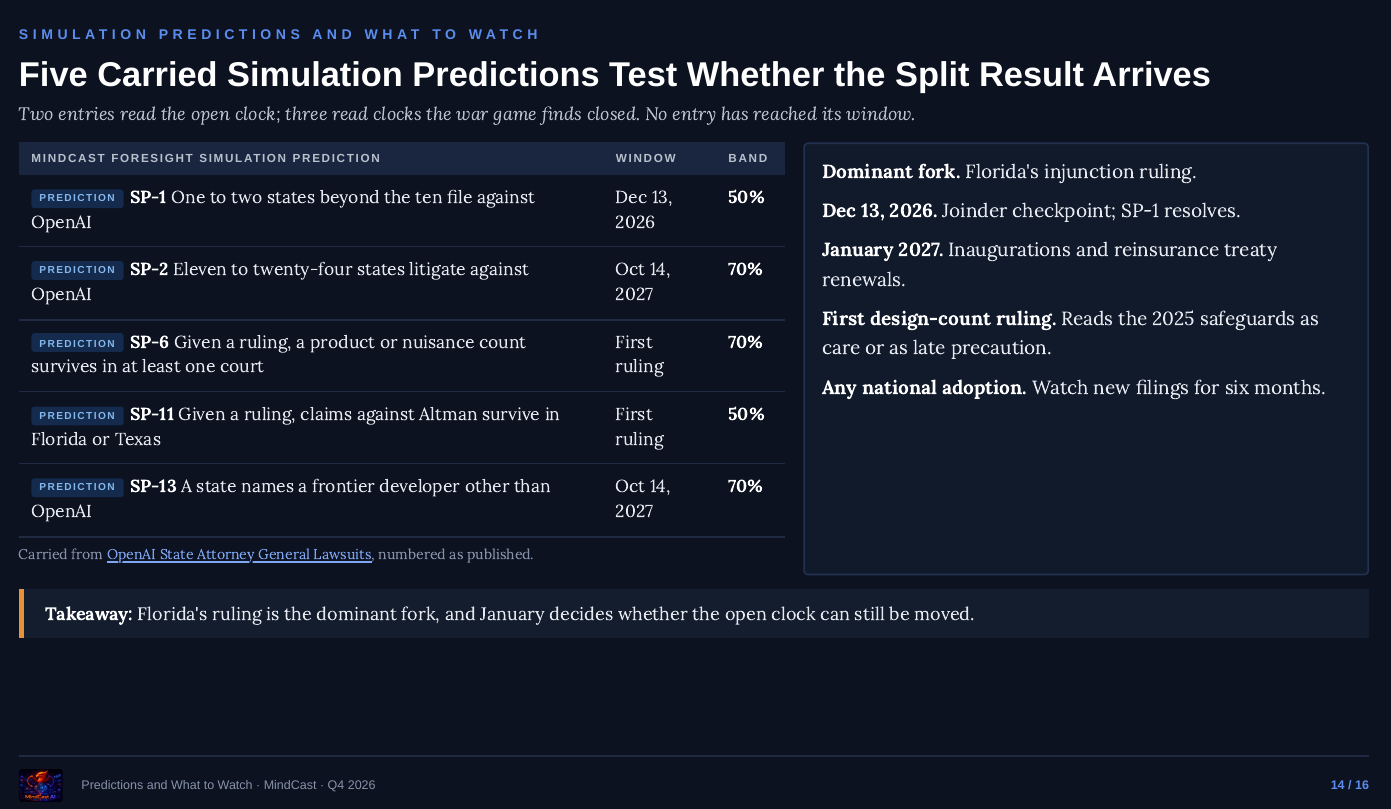
Image 9. Magazine page 14: five carried Simulation Predictions and the dated observables.
SP-1 · One to two states beyond the ten file against OpenAI by December 13, 2026 (50%). Paths: zero additional states 30%, one to two 50%, three or more 20%. Falsifier: the count of new filings at the checkpoint. The breadth clock reads first here.
SP-2 · Eleven to twenty-four states litigate against OpenAI by October 14, 2027 (70%). Paths: ten 10%, eleven to twenty-four 70%, twenty-five or more 20%. Falsifier: the count of litigating states at the window. Alternative 5 tests directly against this entry.
SP-6 · Given a ruling on those counts, a product-liability or public-nuisance count survives dismissal in at least one court (70%). Falsifier: dismissal of every such count. The negligence clock’s one open cell resolves here.
SP-11 · Given a ruling, claims against Altman personally survive dismissal in Florida or Texas (50%). Falsifier: dismissal of the personal claims in both forums. The executive clock resolves here.
SP-13 · A state attorney general files a complaint naming a frontier developer other than OpenAI by October 14, 2027 (70%). Falsifier: no such filing by the window. The odds shift attached to it reads 40% without unilateral adoption of the pleaded terms and 20% with it.
Takeaway: Two entries test the open clock and three test clocks the war game finds closed, so the split Hypothesis B predicts can resolve within the window.
IX. Risk Mitigation Layer
Each entry states the Simulation Prediction with its band and the exposure in a unit the stakeholder controls. Each also names actions with an owner and deadline, followed by the residual, with severity and probability on separate axes.
OpenAI · SP-2 (70%): Severity: high. Exposure: each additional forum adds a full defense docket and one more court that can rule first, counted in active dockets through October 2027. Action 1: legal and policy jointly model the breadth trade of national adoption against its effect on the ten filed counts. Owner: general counsel. Deadline: December 13, 2026. Action 2: stage any adoption to land before the January 2027 inaugurations or not at all. Owner: policy lead. Deadline: January 4, 2027. Action 3: extend any adopted term to all fifty states, so no late joiner gains from filing. Owner: product. Deadline: with adoption. Residual: every adopted term becomes a feasibility exhibit in the ten filed cases, and offices may still file for penalties alone.
Frontier developers not yet named · SP-13 (70%), odds shift (40% to 20%): Severity: high. Exposure: a complaint on either template, counted in dockets and in named executives. Action 1: benchmark minor-safety controls against the Florida, Texas, West Virginia and Iowa prayers for relief. Owner: general counsel. Deadline: November 30, 2026. Action 2: review all public safety statements against the company’s own system cards before the next release. Owner: product counsel. Deadline: next release. Action 3: route each evaluation finding to a release authority and keep the response with the finding. Owner: head of trust and safety. Deadline: each release. Residual: statements made before review remain pleadable, and early adoption does not cure them.
Deployers of AI agents · SP-6 (70%): Severity: moderate to high. Exposure: AI losses outside cover after the January 2026 exclusions, measured as retained loss per deployment. Action 1: list every AI exclusion by form number across the insurance program. Owner: risk manager. Deadline: next renewal. Action 2: seek conditioned affirmative cover that names a trigger, a response, evidence of control and a consequence. Owner: risk manager with broker. Deadline: next renewal. Action 3: negotiate the provider’s liability cap and change-notice terms in the next agreement. Owner: procurement counsel. Deadline: next master services agreement. Residual: losses above any limit and correlated losses from a shared model stay with the deployer.
Carriers on frontier-lab towers · SP-11 (50%): Severity: high on the dispute axis, low on the aggregation axis. Exposure: directors-and-officers defense and Side A exposure on the personal counts, measured in reserved defense cost. Action 1: review reserves on the Altman counts before the first dismissal ruling. Owner: claims. Deadline: before the first ruling in Florida or Texas. Action 2: draft a conduct-condition rider from the pleaded remedies with a consequence clause that preserves third-party payment. Owner: underwriting. Deadline: December 31, 2026. Residual: a rider drawn from counts that later lose imposes conditions the market will not sustain.
Placement: The layer sits as a standalone section, because counsel and risk readers turn to it directly. The trade-off is that a reader working entry by entry must page back to Section VIII.
Takeaway: The named defendant can still move breadth, unnamed developers can still move every clock, and deployers can still buy conditioned cover.
X. What to Watch
December 13, 2026 · Joinder checkpoint: SP-1 resolves on the count of new filings. Three or more new filings would show breadth moving faster than the election calendar allows.
January 2027 · Inaugurations and treaty renewals: Incoming attorneys general open or decline investigative demands, and reinsurers decide whether to write AI aggregation terms. The breadth trade in Section V turns on the first of these.
Florida’s injunction ruling · Dominant fork: A grant in any part makes pre-release oversight an available remedy and raises the cost of every alternative except national adoption. A denial slows the second template.
First ruling on a design-defect or nuisance count: The court’s reading of the 2025 safeguards resolves the one open cell on the negligence clock and tests Hypotheses A and B.
Any national adoption of the pleaded terms: Watch new filings for six months afterward. No new office filing would support Hypothesis B against Hypothesis C.
Takeaway: Florida’s ruling is the dominant fork, and the January inaugurations decide whether the one open clock can still be moved.
XI. Conclusion
The document Iowa cites to prove OpenAI knew is the document OpenAI published to show it was careful. The war game’s principal counterfactual is the fourteen-month window the GPT-4 Technical Report opened. Age assurance and reconciled marketing, conditioned cover and a documented escalation path would each have looked low-cost inside it, with trade-offs the board does not capture. The window closed at the GPT-4o launch, and every clock after it closed on a public event: a lawsuit, an insurance form edition or a caption.
The war game’s transferable result is a dating discipline. Any company deploying AI agents carries the same five clocks, and each closing date can be read in advance from public events. A control bought before the date reduces exposure; the same control bought after it buys less, and less predictably.
Working With MindCast
MindCast AI applies Predictive Behavioral Economics + Dynamic Game Theory through MindCast AI Proprietary Cognitive Digital Twin Foresight Simulations (MP CDT FS). Behavioral Economics supplies the decision rules. Game Theory supplies the payoff structure. Predictive simulations emerge from the combination.
A commissioned war game builds Cognitive Digital Twins of the client’s regulators, plaintiffs, carriers and counterparties. The engagement then plays the client’s own alternative moves against them.
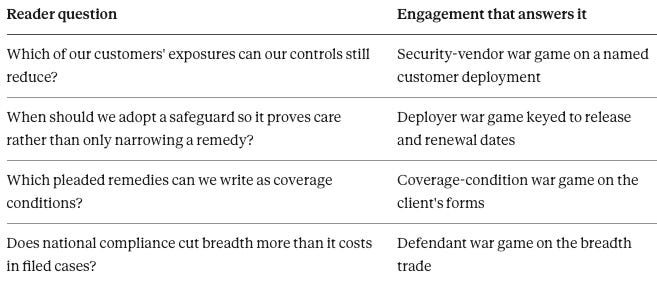
For a security vendor it dates a customer’s five clocks and shows which controls still reduce exposure. For a deployer it tests a control program against its renewal and release calendars. For a carrier it tests which pleaded remedies pass all four elements of a coverage condition.
Readers can replay OpenAI’s six turns and play the five alternatives in the Interactive OpenAI Liability War Game, with the full board in the Magazine Edition.
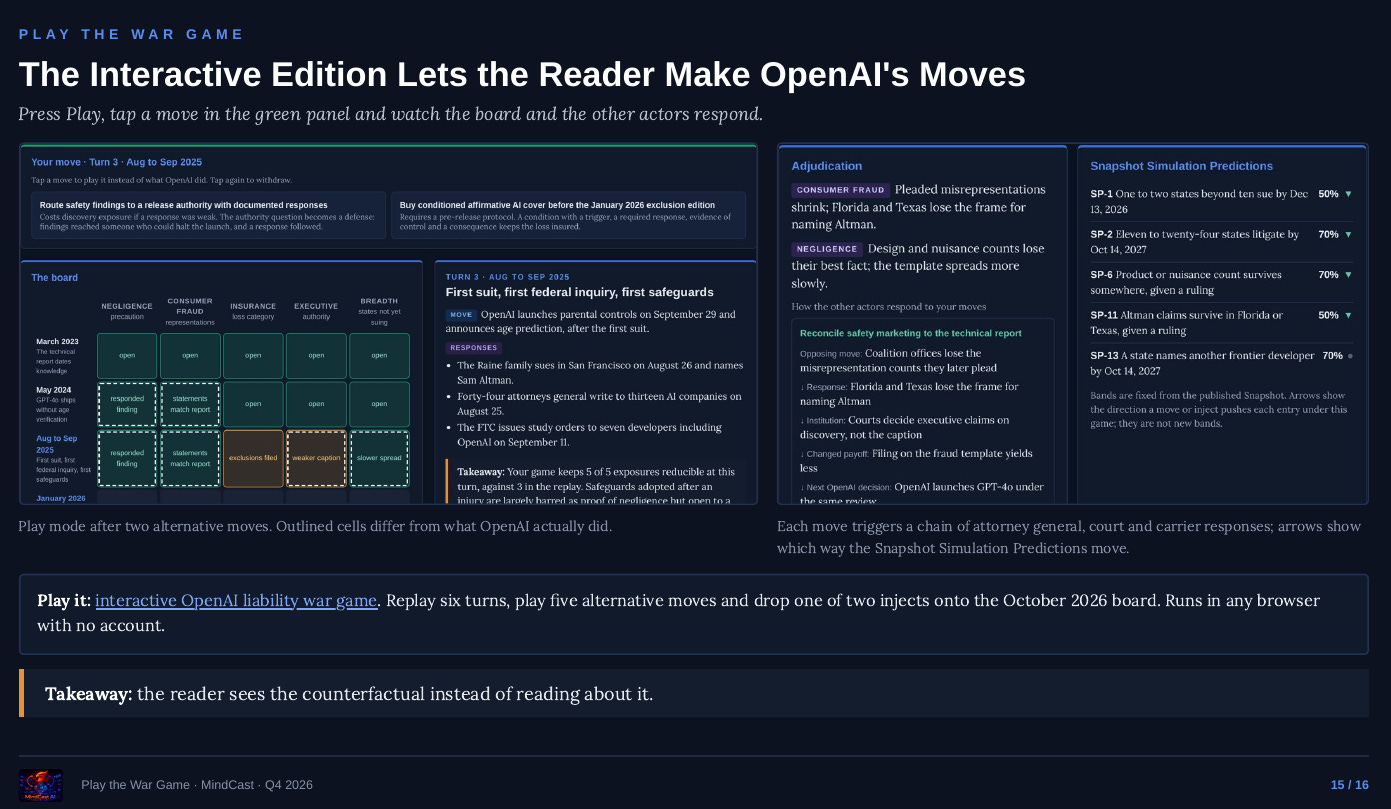
Image 10. Magazine page 15: the interactive edition and its link.
MindCast offers a complimentary pilot built from public filings on a known case before any retainer. Contact noel@mindcast-ai.com to schedule a diagnostic session.
Sources
OpenAI: GPT-4 Technical Report (March 15, 2023). The developer’s own evaluation that the Iowa petition pleads as notice.
OpenAI: Hello GPT-4o (May 13, 2024). The launch date of the model the coalition template names.
Bloomberg Government: “OpenAI Hit With Suit From Family of Teen Who Died by Suicide” (August 26, 2025). Filing of the first wrongful-death suit against OpenAI in San Francisco Superior Court.
Raine v. OpenAI, San Francisco County Superior Court, CGC-25-628528. Case summary confirming Sam Altman as a named defendant.
Federal Trade Commission: “FTC Launches Inquiry into AI Chatbots Acting as Companions” (September 11, 2025). Study orders to seven developers including OpenAI OpCo.
DLA Piper: “AI Companion Bots: Top Points From Recent FTC and Government Actions” (September 15, 2025). Reports the August 25, 2025 letter from 44 attorneys general to 13 AI companies.
OpenAI: Introducing Parental Controls (September 29, 2025). Dates the first safeguard after the first suit.
Federal Rule of Evidence 407: Subsequent Remedial Measures. Bars later safety measures as proof of negligence or defect and admits them to prove feasibility when disputed.
Ault v. International Harvester Co., 13 Cal.3d 113 (1974). California Supreme Court holding that the state’s rule on later remedial measures does not apply to strict products liability.
California Civil Code section 1714.46 (effective January 1, 2026). Bars the defense that an AI system autonomously caused the harm; cited through the foreseeability paper.
Verisk Insurance Services Office endorsements CG 40 47, CG 40 48 and CG 35 08 (January 2026 edition). Generative-AI exclusions; cited through the coverage-conditions paper.
Florida, Texas and coalition complaints, dockets and removal history as compiled in the Snapshot’s complaint matrix.
MindCast Works Cited
OpenAI State Attorney General Lawsuits — Two Pleading Templates Across Ten State Courts Decide Which Game Theory Evolution Arrives First. The current board and the five carried Simulation Predictions.
Agentic Foreseeability and the Modern Duty of Care for AI Agents. The four-question assessment that dates the negligence and executive clocks.
Who Sets the Agentic Standard of Care — Common Law, State Legislation and Federal Coordination. The legal clock and the deployment clock that security vendors must reconcile.
Who Writes AI Insurance Coverage Conditions — Procurement, Enforcement Decrees, Partner Terms and the Two-Axis Condition. The four loss categories and the four-element condition behind Alternative 3.
Who Absorbs Correlated AI Loss — Reinsurance Aggregation, Industry Pools, the Public Backstop and the Liability Shield. The shield route and the correlated-loss definition behind the companion war game.
How State Attorney General Coalitions Form, Grow, and Hold. The joining model behind the breadth clock.